House walls and brick fronts
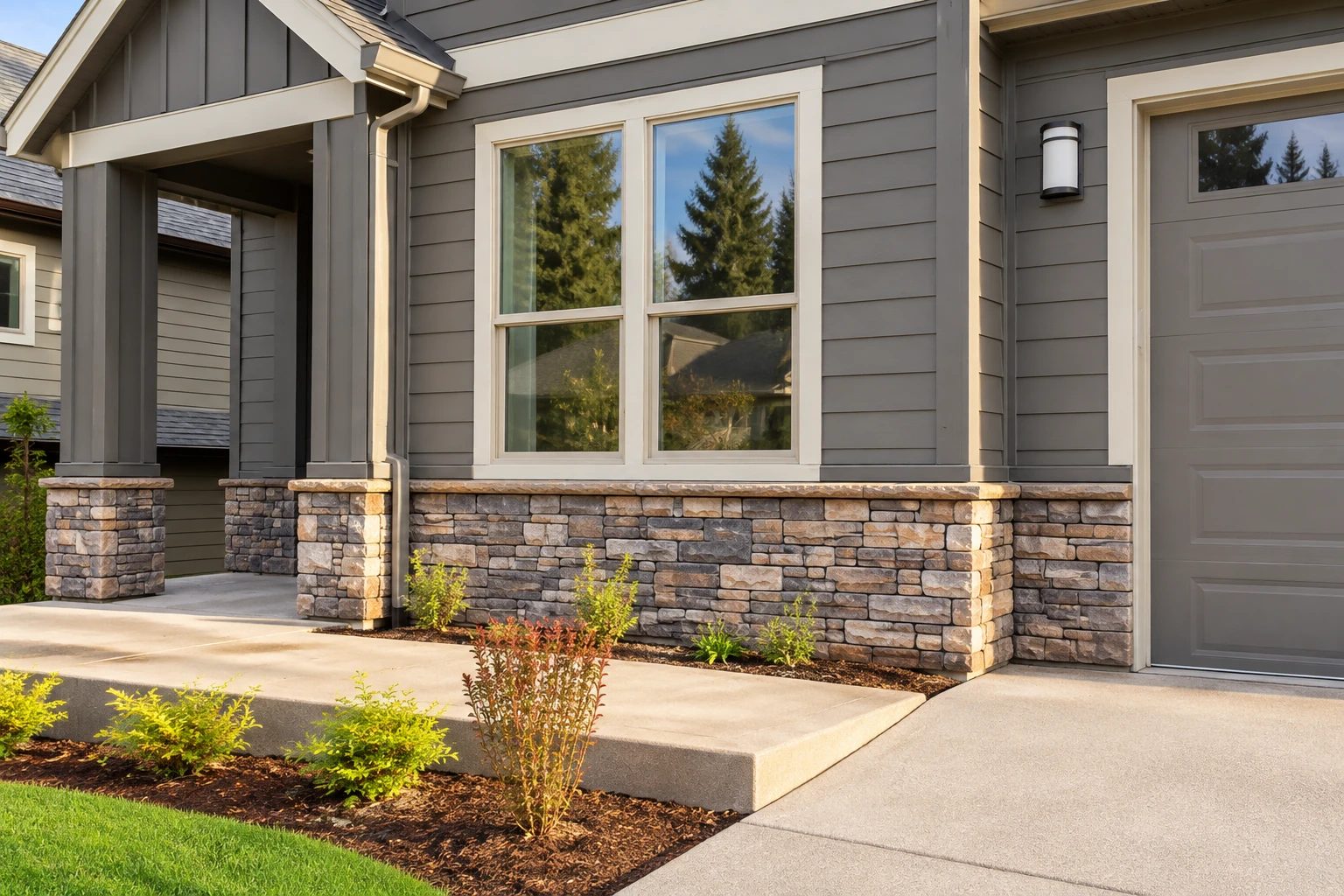
Worn joints on the walls of the house let water into the brick, so pointing them is usually the first fix, well before any brick needs replacing.
Mortar crumbling, sandy or cracked between your bricks? We cut it out, refill the joints and leave a wall that lets far less water in.
Brick pointing in West Palm Beach means taking the worn mortar out from between your bricks to an even depth and packing fresh mortar back in, which closes the gaps that let water work into the wall.
Most calls start with a wall that sheds sand from the joints, or thin cracks running where the mortar meets the brick. The price turns on how much wall needs work, how deep the bad mortar goes, how thin the joints are, since thin ones take more handwork, and how high we have to reach. The schedule turns mostly on the size of the wall and whether any loose brick has to be reset first. At the estimate I'll tell you whether it's a few spots or the whole wall, and if the job needs a permit, we check with the office that covers your address, pull it and set up the inspections.
I come out and give the estimate in person, so you hear straight from the person planning the job whether it's a few bad joints or the whole face of the wall.
The masons on your wall work for us, so the way the joints get cleared and filled is the way I described it to you when I priced the job.
I spent years running schedules for a busy construction company, and I've seen what a blown schedule does to a homeowner. We're known for showing up on the day we planned.
I start by walking the wall with you and marking which joints need it, so the plan matches what's actually failing. Before we touch the whole wall, we fill a few joints in a hidden spot with new mortar to check the color against your old joints. Then our masons take the old mortar out to an even depth, by hand wherever the joints are thin, because a grinder in a thin joint chips the brick edges and cuts past the short upright joints between bricks. We brush the joints clean, pack the new mortar in, shape it to match the joints you have and clean the brick face before we leave.
Sometimes the joints are only part of the story. Cracks that climb the wall like stair steps usually mean the house has moved, and fresh mortar won't last long over that, so we look at foundation repair before we point. Crumbling joints on a chimney often come with other wear up top, and we take that on as chimney repair.
Worn joints on the walls of the house let water into the brick, so pointing them is usually the first fix, well before any brick needs replacing.
A freestanding brick wall takes weather on both faces and along the top, so its joints often wear out ahead of the walls on the house.
Chimney joints are hard to see from the ground, so the mortar up there is often far gone before anyone notices. Pointing it keeps the brickwork tight.
Brick steps, gate columns and planters get walked on, watered and bumped, so their joints crack early. Repointing them keeps loose bricks from working free.
Send the form and we'll get back to you within one business day to set a time. I come out, look at the joints and give you a free estimate on site, with no pressure to book.
A few close photos of the worn mortar and one of the whole wall help me see what I'm walking into before I come out to look.
A paced-off or guessed length and height is plenty, because it lets us plan the visit and gives you a sense of scale before I measure on site.
We pick up Monday through Friday from 7 AM to 10 PM and on weekends from 6 AM to 11 PM, so you can reach us after work.
Joint shapes, mortar colors and brick patterns you can point to when we talk through how your finished wall should look.
Straight answers on the signs, the mortar, the cost and the county rules that come up when we look at a worn brick wall.
Your brick needs repointing when the mortar has worn back more than a quarter inch from the face, crumbles when you rub it, or shows holes, hairline cracks or cracks between the brick and the mortar. Any one of those gives water an easier way into the wall. Send us a photo and I'll tell you what I see.
Mortar usually lasts roughly 25 to 50 years, while the brick itself lasts about 100 years or more. That gap is normal, so the plan is to renew the joints when they wear and keep the brick you have. On most walls that means one or more rounds of pointing over the life of the house.
Across the US, brick repointing usually costs about $400 to $2,500 per 100 square feet of wall. That's the usual national price for the work, not our price. We'll give you our own figure once I've seen your wall, and our work is backed by our satisfaction guarantee.
The new mortar should match the original mortar's strength or be weaker. Stronger mortar adds stress where the brick meets the joint and can cause spalling, where the face of the brick breaks off. Older houses generally get the weakest mix and newer brick walls take a different one, so ask any crew what they'll use and why.
No, brick repointing should be done by people with real repointing experience, and an excellent mason may not be qualified for it. Before you hire, ask how much repointing the crew has done in particular, how they take out the old mortar and what mix they'll use. Joint repair is what we're best known for, so I'm glad to answer all three.
Only homeowners and qualified contractors can pull permits in Palm Beach County, and the county requires contractors to be certified and insured. Since mid-2025, some trades no longer need the county's own competency card because state law now covers them, so certification and insurance are the things to ask about. We're based in West Palm Beach, work across the cities around it, and we're licensed and fully insured.
Call (561) 220-1584 or send the form, and I'll tell you plainly what needs pointing now and what can wait a few years.